




Meet
Get started with professional SEO services by requesting a strategy proposal today from the top-rated SEO company.

Be where your customers are and your competitors aren’t- AI search results.
Get SEO Proposalhttps://seofat.com/
Starting a business is often associated with large investments, office spaces, and significant financial backing. But the reality is different. In today’s digital-driven era, many successful businesses have started with little to no capital. What truly matters is not the size of your investment but the strength of your idea, the value you offer, and the strategy you follow to reach your target market.
With access to online platforms, free digital tools, and global audiences, enthusiasts can now build and launch businesses. All they need are relevant skills, knowledge, and a business mindset. In fact, there are multiple opportunities for aspiring entrepreneurs to start small, validate their ideas, and gradually scale without high upfront costs. Curious to explore more?
Keep reading this post! Below, we have shared a detailed guide on how you can start a business with no money!
While it can seem unexpected that a business can be started with little capital, many entrepreneurs are already doing it. Even without money, you can build a scalable and stable business.
Simply put, to launch a business with no money, choose the business model that can be run from home while providing significant value to other firms or consumers. With a good concept and plan, entrepreneurs can start a profitable business.
So, wondering what types of businesses you can start without big investments? Explore some practical business models below:
This business model is all about monetizing knowledge. You can create online training programs, professional webinars, and industry-specific courses and offer them to firms, professionals, and students looking to better their abilities.
Best part? This company can be operated fully from home utilizing webinar platforms or learning management systems. Content is a scalable source of recurrent revenue as it can be utilized and sold again once it is generated.
This high-value, low-investment model uses experience rather than capital to help business enthusiasts build thriving businesses without huge initial expenditures.
In a dropshipping business, aspiring entrepreneurs sell products online without holding inventory or managing shipping. Suppliers handle storage and delivery, while the business owner focuses on running the online store, managing orders, and building the brand.
This model allows entrepreneurs to operate from home with minimal financial risk, since there’s no need to invest in stock or warehousing. It also lets businesses focus on marketing, product positioning, and sales strategy, helping them build a strong, scalable e-commerce brand without high upfront costs.
Service-based enterprises solve customer problems rather than sell things. Consulting, training, operational support, and technical help are the foundation of these startups.
Starting from home, entrepreneurs can meet and communicate with customers online. Service-based models generally lead to long-term contracts and client relationships since it often need reliable external expertise.
Knowledge or professional experience underpins a skill-based business. Entrepreneurs with competence in finance, education, management consulting, coaching, or technology can provide organized business services.
These enterprises frequently start as consulting practices but grow into professional service firms. Early-stage entrepreneurs can concentrate on customer acquisition and skills rather than infrastructure expenditures by working from home.
Many businesses outsource internal support functions to save money and keep their personnel focused on their main responsibilities. Entrepreneurs can start a remote administrative, documentation, internal reporting, research, or HR support firm.
This form of business can be readily managed from home while working with many organizations simultaneously. As the customer base increases, the service might become a professional business support agency that improves internal processes.
Professional consulting and advising services assist firms in handling strategic or operational issues. To enhance decision-making, operations, or growth plans, companies recruit external consultants.
Consulting firms can be started from home and run via virtual client sessions. Successful consultants frequently add services, hire teams, and become specialized advising businesses with high-value customers.
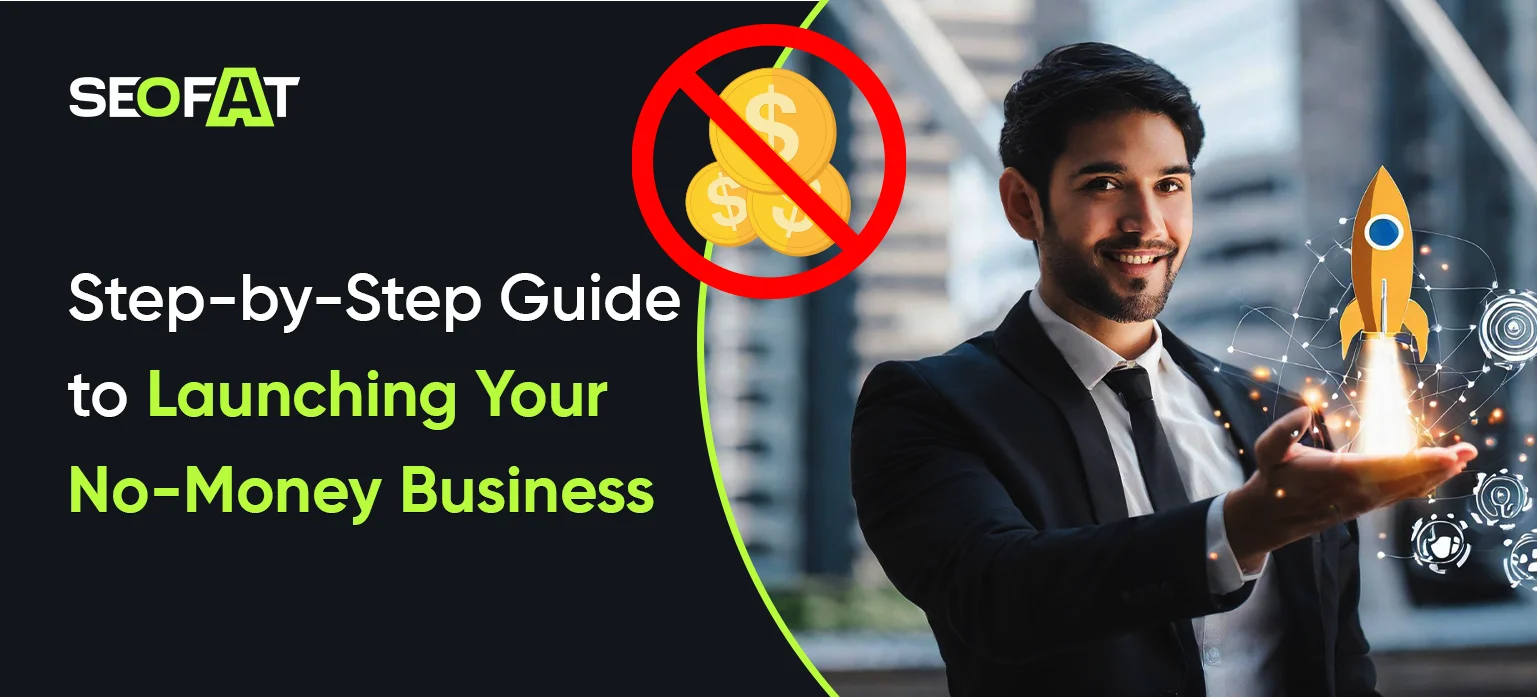
The true investment in "No Money Business" is clarity, effort, and a strong business approach. Successful zero-capital entrepreneurs start strategically. Curious about it? Explore these points:
Start with a business concept that doesn't need inventory, office space, or pricey equipment. Focus on home-based enterprises that use your expertise, talents, or internet platforms. Starting without financial constraint is simpler with a clear, realistic plan.
After choosing a business idea, determine its target market. Know your consumers, their challenges, and how your product or service can assist. A distinct target market helps you concentrate and express value.
Start without a complicated document. A basic plan describing your offering, target clients, price strategy, and advertising is enough. This strategy guides your start-up launch and keeps you organized.
Even small businesses require a professional website. Thus, make a basic website, landing page, or company profile. By doing so, you can explain your services to prospective customers and scale with strong online visibility.
Contact prospective consumers, colleagues, and business communities. Networking can lead to initial clients and service trust. Zero-investment enterprises often thrive via recommendations and direct interactions.
Early consumers shape your business's reputation. Deliver meaningful value and communicate professionally. Client satisfaction typically leads to repeat business and recommendations.
After starting a business, consistent marketing is essential. Use search engines, online platforms, and business networks to reach more clients and grow your firm.
While you started with a zero-money business, that does not mean it will last long. Take some of the investment from the collected revenue on your brand’s improvements. A startup becomes more organized and scalable with gradual upgrades.
After starting your No-Money company, the next step is to scale online and attract the targeted audience. That's when marketing plays a crucial role in online growth. Smart marketing strategies help small businesses grow and compete, even on a limited budget.
If you're looking to grow your firm from the ground up with no capital at all, consider the following marketing strategies:
The first step is making your startup easy to discover online. Potential customers can trust a simple website or landing page that defines your services, price, and contact information.
Search engine optimization helps your startup appear in relevant service searches. Keyword-optimized website content, service pages, and blog posts can attract clients who are actively seeking answers. In fact, SEO performed by the right professionals, like SEOFAT, is one of the best long-term marketing strategies for company growth.
Collaborating with other firms might boost your reach for free. Partners who offer comparable audiences might promote each other's services and earn new clients. These connections typically generate referrals and long-term revenue.
Email marketing builds long-term consumer ties. Many businesses often use email marketing to deliver advice, promotions, and news. This marketing approach is a great business asset to increase sales and attract consumers.
Ongoing contributions of industry insights, ideas, and suggestions help establish credibility for businesses. Using content marketing to attract a certain population that has already shown an interest in your niche can help you acquire new customers.
Marketing should be based on facts, not assumptions. Businesses must frequently evaluate their marketing efforts. Reviewing website traffic, customer queries, and conversion rates shows which techniques work.
This lets companies concentrate on successful campaigns and tweak ineffective ones. This method increases decision-making and streamlines corporate growth.
Anyone can start a profitable business with zero capital! All you need is the right business strategy, skills, and strong marketing efforts. But what's the real struggle?
Well, even startups with substantial investments often fail in the online marketplace! That’s not because the idea is terrible, but due to the poor business strategy, limited visibility, or ineffective marketing.
That’s when SEOFAT can be a reliable and strategic marketing support for growing businesses, helping startups achieve a strong digital presence. They provide:
SEOFAT helps startups become competitive, scalable companies by integrating marketing, technological competence, and business strategy.

SEO forecasting predicts future organic traffic, rankings, and revenue by analyzing historical data, search volumes,...
Read More
Pinterest is more than a social media platform. It functions primarily as a visual search...
Read More
To improve website performance in both traditional and AI search engines, brands often implement Open...
Read More
Keyword cannibalization becomes a core risk for brands that publish a high number of content...
Read More