



Meet
Get started with professional SEO services by requesting a strategy proposal today from the top-rated SEO company.

Be where your customers are and your competitors aren’t- AI search results.
Get SEO ProposalAI search engines scan a page for clear questions and direct answers to find the best match for a user's response. This shift has changed how businesses optimize content. Publishing helpful articles is important, but your content must be structured and easy for both users and search engines to read and understand.
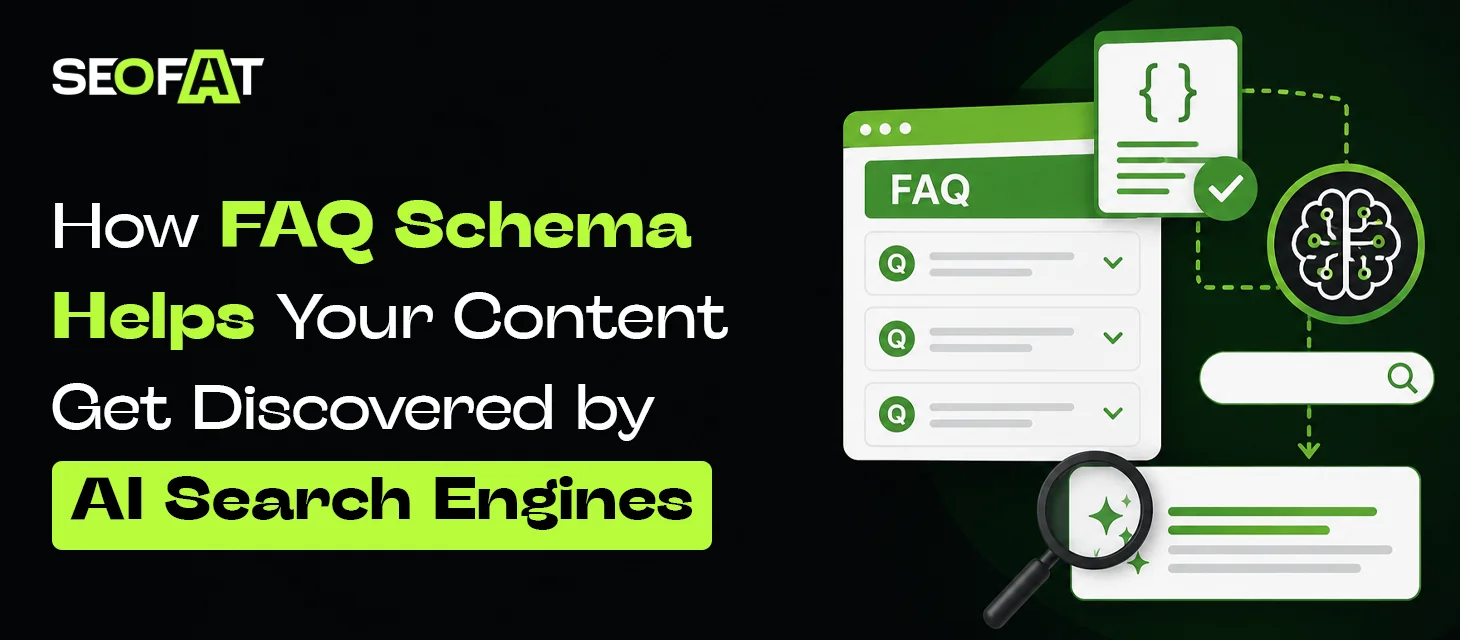
FAQ schema helps your content get discovered by AI search engines by providing direct data for Generative Engine Optimization (GEO) and Answer Engine Optimization (AEO). Pages with FAQPage markup are more likely to appear in Google AI Overviews because of pre-formatted, structured data, which is prioritized by AI algorithms.
Follow along with this blog to understand how FAQ Schema markup improves your AI search engine visibility.
FAQ Schema is a structured data markup added to a website to inform search engines that a specific section of your webpage is organized as questions and answers. It is usually written in JSON-LD format.
The Code Setup: You add a small block of script using the FAQPage, Question, and Answer types to your page.
The Crawl: Search engine bots scan your website and read this hidden code alongside your visible text.
The Match: The search engine matches the clear data labels to user queries.
The Display: The search engine features your Q&A pairs directly in the search results page or feeds them to AI-driven summaries
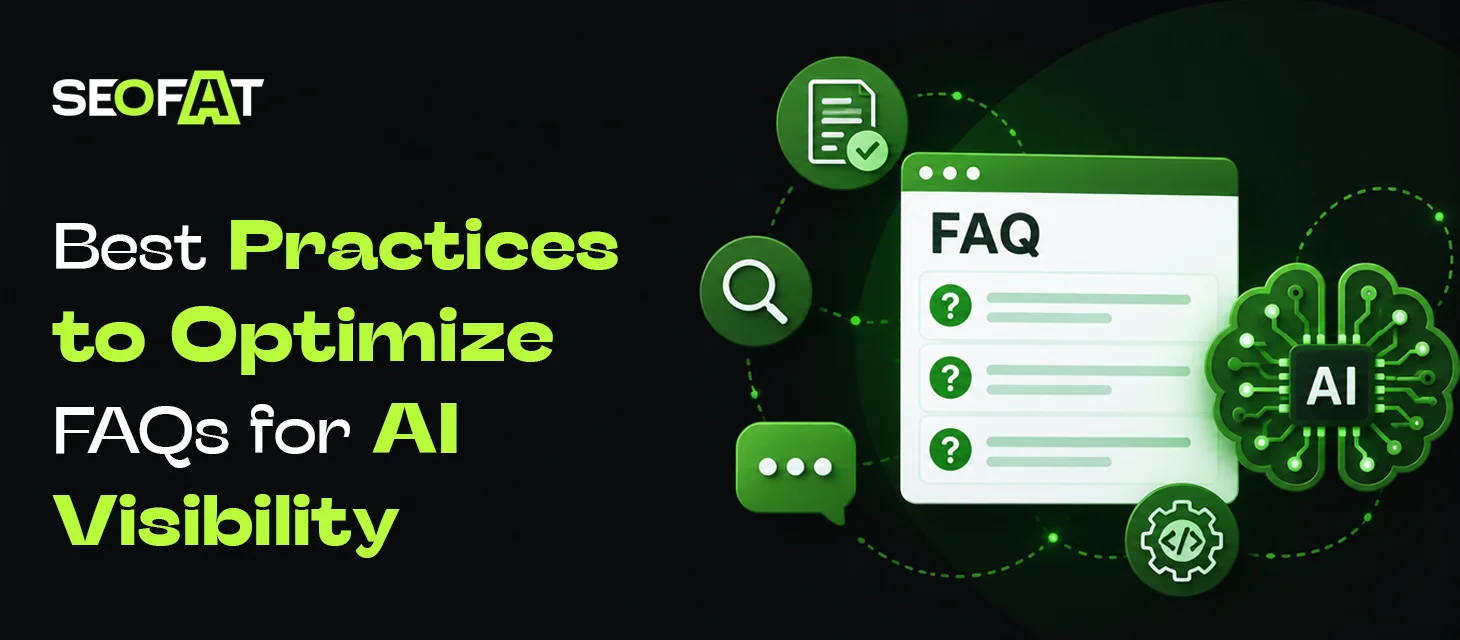
Getting FAQ schema is about writing questions the way people actually ask them and answering them clearly. It also includes keeping our technical optimization accurate to ensure the content is easy to access. Here are the top practices to optimize FAQs for AI visibility.
An AI model can only cite content from pages that are easy to read and crawl. If the answer is written in confusing language or in long paragraphs, AI will most likely fail to extract it.
Good content structure removes that issue. For easy content extraction:
The biggest mistake in FAQ writing is not using user intent. Your research must be supported by Google or asked in ChatGPT to find the top user queries.
Start with real data.
A few well-chosen questions usually perform better than multiple generic ones. Quality of user intent match matters more than volume here.
Even a well-written FAQ section won't be cited if the website isn't optimized. This is where much good content fails to gain visibility.
As next-gen AI SEO services change, brands must focus on making their content clear and highly authoritative. FAQ Schema helps by putting your questions and answers into an organized format that AI systems can easily scan. While using this code does not guarantee your content will appear in AI summaries, it greatly improves your clarity and boosts your search signals.
Create FAQs based on your audience queries and intent. Research user queries and answer them in a natural, conversational way.
Best practices:
AI search engines prefer direct answers because they are easy to extract. Each response should address a single question without fluff content and details.
Follow these guidelines:
Your content must include a set of related FAQs that enhance topical relevance. Cover your primary topic from multiple angles and showcase your expertise.
Include questions about:
Also, link your FAQs to related blog posts, guides, and service pages to strengthen your content cluster.
To help search engines, implement FAQ Schema using the JSON-LD format preferred by Google. Always verify that your hidden data matches the public text on your live webpage. Using incorrect or mismatched code can cause search engines to ignore or misunderstand your content entirely.
Before publishing:
Keep your FAQ section up to date to ensure the information remains accurate and relevant for users and AI search engines alike.
Review your FAQs regularly to:
FAQ Schema delivers the best results when supported by high-quality content. AI search engines prioritize websites that demonstrate real expertise and offer trustworthy information.
Strengthen your EEAT by:
By combining structured FAQ content with strong EEAT signals, your brand can improve its visibility across AI search engines.
Want to rank your content in AI Search results and Overviews?
Partner with SEOFAT to implement FAQ Schema to optimize your website for AI search engines. Our team helps you with a custom AI SEO plan that increases your brand's visibility, authority, and organic traffic across both traditional and AI search results.


SEO forecasting predicts future organic traffic, rankings, and revenue by analyzing historical data, search volumes,...
Read More
Pinterest is more than a social media platform. It functions primarily as a visual search...
Read More
To improve website performance in both traditional and AI search engines, brands often implement Open...
Read More
Keyword cannibalization becomes a core risk for brands that publish a high number of content...
Read More