



Meet
Get started with professional SEO services by requesting a strategy proposal today from the top-rated SEO company.

Be where your customers are and your competitors aren’t- AI search results.
Get SEO ProposalHigher education lead generation is increasingly competitive as students use search engines, social media, and AI tools to research options. Educational institutions need to follow effective higher-ed marketing trends to create awareness and attract qualified applicants. Top marketing firms for Ed-tech businesses and institutes use targeted local SEO, content marketing, paid advertising, social media marketing, and reputation management to reach students and improve lead generation for the business.
A professional lead generation company like SEOFAT provides digital marketing services to help higher-ed institutions improve online visibility, attract relevant traffic, and support enrollment growth. The following seven higher-ed marketing trends can help colleges and universities strengthen student acquisition and attract more qualified applicants.
Students now use AI tools to compare courses, tuition, admission rules, and career options. This means colleges need content that gives direct, useful answers. AI can also help marketing teams send more relevant messages based on each student's interests in the admission journey.
Answer Engine Optimization helps colleges make their content easier for AI search tools to cite. Instead of writing for keywords, it focuses on answering common student questions to build trust and authority.
Different students may be interested in different information for their respective career growth. AI personalization can help colleges create different communication paths based on these interests. This structured process helps to improve higher education lead generation for a business.
Students usually want to understand college life before making a decision. Short videos on TikTok, Instagram Reels, and YouTube Shorts can show campus life in a quick and relatable way. At the same time, students use social platforms to search for reviews and experiences.
Short videos can show details that traditional college ads often miss. These simple videos can help prospects understand the experience before they visit.
Social media is not only used for posting updates. Colleges should make their content easy to find and understand so new students feel connected with the institute.
Students often trust real student experiences more than any advertisements. Student-generated content gives colleges a chance to show campus life through the people who experience it every day. This makes the college feel more relatable and can help build trust with potential applicants, improving higher education lead generation.
Students can create content around the everyday parts of college life. These stories need to be simple, honest, and useful to prospective students.
Campus visits are not always possible for every student. International applicants, remote students, and families living far from campus may need other ways to explore a college. Virtual tours and interactive experiences can help students to explore important spaces and learn about programs without travelling.
Virtual tours can give prospective students a better idea of what they will experience on campus. They can explore classrooms, libraries, residence halls, and other facilities digitally.
Interactive elements can help students explore the program, understand the learning experience, and improve higher education lead generation.
SEO is a key strategy for higher education lead generation. When combined, paid advertising and SEO can produce stronger results. Organic search can build long-term visibility, while PPC can bring faster traffic for important programs and admission periods. When both channels use shared data and messaging, colleges can create a more consistent student journey. This approach also helps marketing teams understand which keywords and pages are generating valuable leads.
For example: The average Facebook ads cost per lead (CPL) for education and EdTech in Southeast Asia ranges from $2 to $8 for native lead forms and $5 to $15 for external landing page conversions.
Paid campaigns can show which keywords attract clicks and leads. SEO teams can use this information when planning content and optimizing pages. The same process works in reverse when strong organic pages are used for paid campaigns.
Students may not want to leave social media just to complete a long form. In-platform lead forms can reduce this extra step and make higher education lead generation easier.
These forms can work well for:
Presenting a simple list of courses may not be enough to convince a student to apply for admission. Colleges need to explain how their programs can support career goals and provide value. Clear information about careers, tuition, and financial aid can help students make informed choices.
Higher education lead generation businesses must make dedicated program pages that connect academic learning with potential career opportunities. It can be used to:
Cost is a major part of the college decision. Students and parents should not have to search across several pages to understand tuition and financial aid options. Clear information about tuition, scholarships, grants, and other costs can reduce confusion and build confidence in the institution.
A student inquiry does not always lead to an immediate application. Some prospects need weeks or months to compare programs and costs. Predictive analytics and CRM systems help colleges understand these leads and follow up at the right time.
Not all leads show the same level of interest. Someone who reads a blog may still be researching, while someone who downloads a program guide and requests admission information may be closer to applying.
Lead scoring can help teams identify these differences.
CRM automation can help colleges respond to student actions on time. Automated systems can automatically send them details about the curriculum. This keeps communication timely without sending the same message to every prospect.
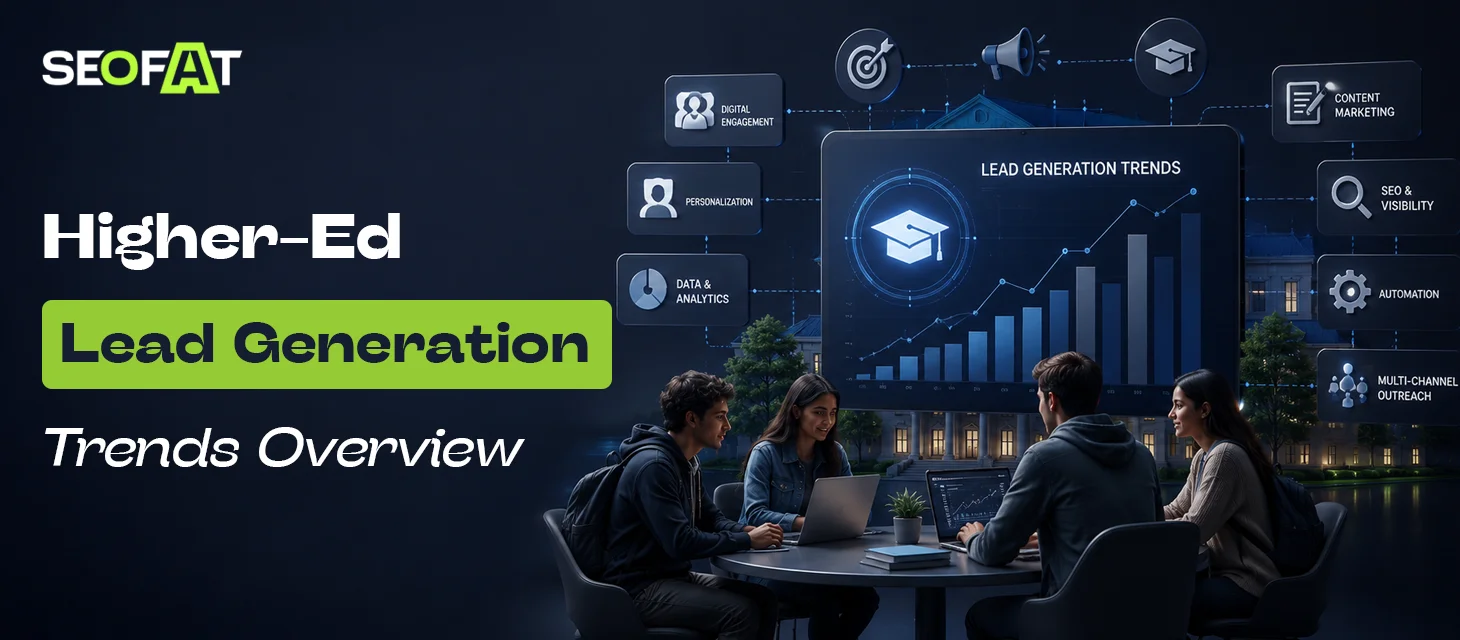
Higher-education lead generation focuses on quality leads, where AI-driven personalization and targeting play a key role. The following table mentions key Higher-Ed Lead Generation trends.
| Marketing Trend | Primary Target Audience | Essential Implementation Tools | Expected Impact |
|---|---|---|---|
| AI Personalization | Gen Z, Non-traditional, Parents | Element451, HubSpot | High conversion rates |
| Social Search | Gen Z, Gen Alpha | TikTok, Instagram, YouTube | Increased brand discovery |
| Next-Gen SEO | High-Intent Students, Parents | Google Search Console | Stable organic lead flow |
| Immersive Digital | International, Out-of-State | YouVisit, Concept3D | Higher engagement metrics |
| Predictive Analytics | Enrollment Managers, Marketers | Salesforce, Slate CRM | Higher quality leads (CPL) |
| Authentic Branding | All Prospective Students | User-Generated Content | Deeper emotional trust |
| Blended PPC & SEO | Immediate Searchers | Google Ads, LinkedIn Campaign Manager | Maximum search page footprint |
To launch a successful higher education lead generation strategy, businesses need to follow advanced marketing trends. Professional higher-ed marketing strategies use multiple channels to answer student questions, build trust, and show real experiences to gain qualified leads.
Looking for a professional marketing company for student lead generation?
SEOFAT can help institutions attract, nurture, and convert more qualified student leads. Contact us today!

Most B2B startups need a reliable flow of qualified leads to build a strong sales...
Read More
Real estate lead generation is important for a property business looking to generate a steady...
Read More
Generating B2B healthcare leads targets highly regulated buyers, such as hospital administrators or clinical directors,...
Read More
The most successful law firms use a hybrid approach that balances lead generation and referrals....
Read More