



Meet
Get started with professional SEO services by requesting a strategy proposal today from the top-rated SEO company.

Be where your customers are and your competitors aren’t- AI search results.
Get SEO ProposalTraditional SEO helps brands optimize content for search engines like Google and Bing. However, modern users depend on AI answer engines, most notably ChatGPT, for quick, direct answers. To make your business visible in ChatGPT, brands must shift from generic SEO to Generative Engine Optimization (GEO). This is because ChatGPT builds its recommendations based on authoritative brand mentions across the web, clear data structure, and business trust signals.
Professional AI SEO agencies like SEOFAT focus on helping businesses build strong business authority and content structure to support AI visibility across multiple platforms. Follow this guide to learn how to build a business presence that is easy to discover, understand, verify, and cite on AI platforms like ChatGPT.
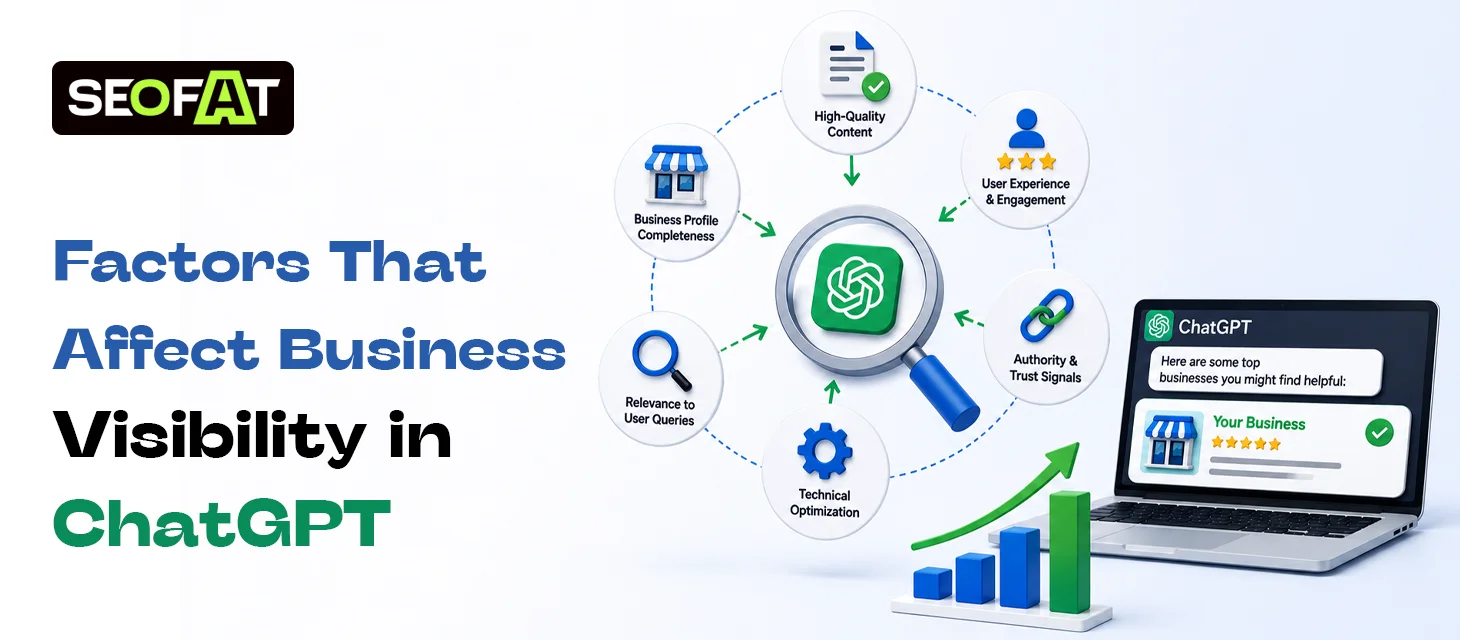
Brand visibility on ChatGPT requires a combined on-page and off-page strategy. Visibility can vary based on the user's question, available information, search context, and the sources ChatGPT can access. The core factor that ChatGPT assesses before citing any business is its third-party signals. It directly recommends brands that seem highly credible and contextually relevant.
Your business needs to offer users genuinely relevant content that answers their queries. If your content is generic or vague, it will not be considered for extracting answers. Create content that addresses specific problems, industries, use cases, and buying stages. This makes your website more relevant to detailed conversational searches.
If someone searches for "Best AI SEO company.” A business specializing in the best AI SEO Services is more likely to be considered than a general SEO company without clear expertise.
This is why creating pages specific to your services and target customers is important for brands to make their content qualified for citations.
Business information needs to be updated regularly for accuracy and freshness. ChatGPT favors businesses that signal ongoing active operation and updates, as it ensures that the website features new and updated content. Additionally, thin service pages and generic blog posts provide no targeted, useful, or qualified information.
To get visibility in ChatGPT, review important pages regularly and update information when it becomes outdated.
Strong content should be:
Focus on targeting popular user queries in your niches, and make meaningful improvements as business information updates.
Businesses with a strong reputation across the web have more supporting evidence around their expertise. ChatGPT only mentions businesses that are highly credible and authoritative.
To get cited in ChatGPT, brands can build authority using:
The goal is to build a credible reputation in your specific industry.
Your website mentions and strength contribute to its visibility and authority signals. Third-party website mentions can help build strong industry relevance and a positive image of your business.
For example, if an established industry publication describes a company as a specialist in top enterprise SEO services, while its website and other profiles provide consistent information, those sources collectively build the company's positioning.
Make it easy for search systems to understand your company as a distinct entity.
Your website should clearly state:
Use the same core information across reputable platforms. Prioritize relevant and trustworthy mentions to build your business expertise and value in the industry.
Reviews can provide useful signals about how customers experience your business. Encourage genuine customers to leave honest feedback on relevant platforms. Ensure these reviews are not fake self-posted to help search engines verify your legitimacy and performance quality.
If customers consistently mention your support, technical expertise, or product quality, those factors can help define your brand reputation.
If search engines cannot access your website properly, your content becomes harder to discover. It is one of the most important factors to keep your business easy to read, scan, and crawl, improving its brand mentions and citations.
Important pages should not be unnecessarily blocked from crawling or hidden behind elements that prevent proper access. Keep your XML sitemap updated and monitor indexation through tools such as Google Search Console.
Your competitors are competing for AI search visibility too. Test relevant prompts and record which companies are mentioned.
Ensure you check:
Don't copy competitor strategies and content plans. Use the research to identify genuine gaps in your own content and authority to build content that supports your page accuracy and relevance.
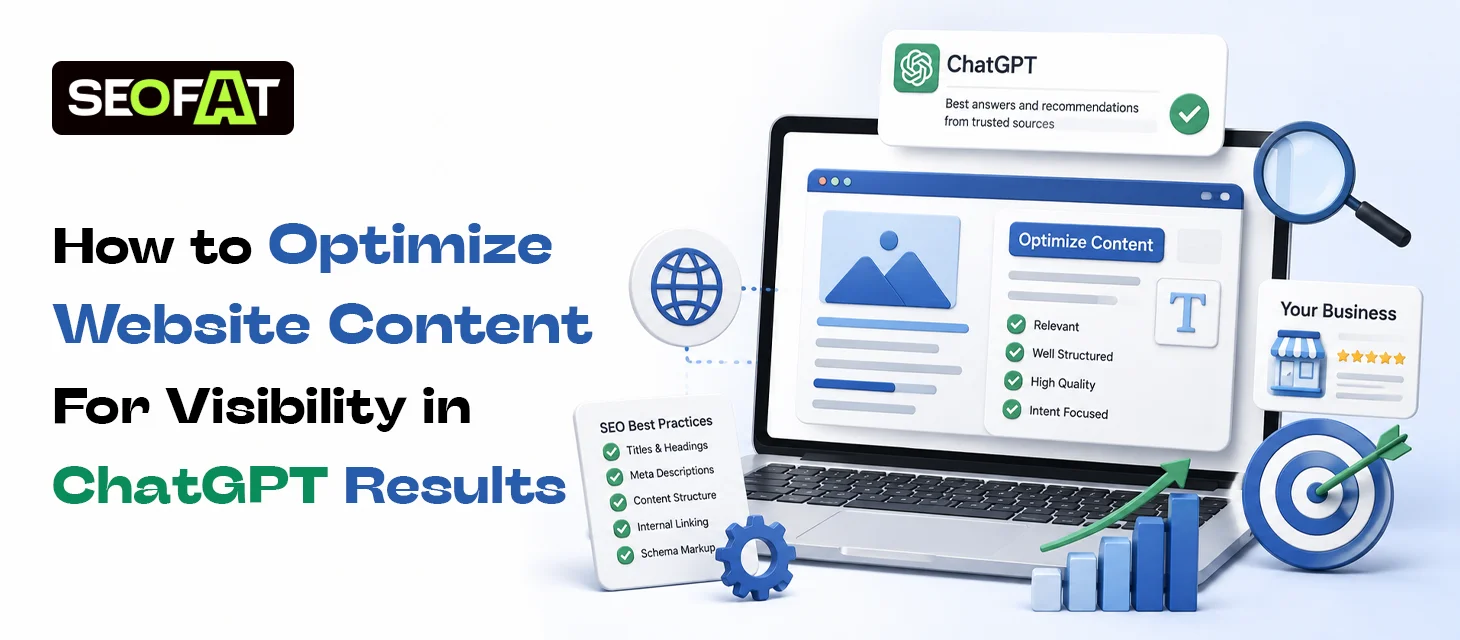
To optimize your website content for visibility in ChatGPT results, you must practice Generative Engine Optimization (GEO). Your website should give AI platforms clear, useful information about your business, which improves its search performance and user experience. Core optimization steps to make your business visible in ChatGPT include:
Start with the pages that clearly explain your business offering. Every important service or product should have its own optimized page with targeted information and not generic content.
A strong service page should clearly explain:
For example, an SEO company should have separate, useful information around services such as AI SEO, GEO, and AEO to target specific users. This gives AI search engines and users more context about your expertise.
AI search is naturally conversational. Users often ask complete questions instead of targeting keywords. To build your content authority, create content around the questions your customers actually ask in your industry.
Useful sources for question research include:
Don't create content that is generic just to target your keywords. To ensure your business gets cited in AI platforms, answer user questions and match their search intent to offer businesses real information that is helpful for them.
AI systems need to easily crawl and extract data structure to understand information quickly. For better AI visibility, make sure your content has a structure that is easier to find. Start with the answer, then provide supporting details. This structure works well because users get the answer immediately, while search systems can also identify the main point more easily.
Don't hide critical business information inside complicated navigation. Use clear navigation and descriptive headings to make the core information available directly on relevant pages. A simple structure can help users understand:
Who you are → What you offer → Who you serve → Where you operate → Why customers trust you
Don't publish individual articles around different keywords that don’t interconnect. Build groups of related content around topics your business genuinely understands.
For example, an SEO agency could create a guide about AI SEO and support it with articles covering:
Connect these pages with relevant internal links to establish relationships between your content and give search engines a clearer picture of your expertise.
Google's E-E-A-T framework stands for Experience, Expertise, Authoritativeness, and Trustworthiness. Additionally, high fact density can boost an article's AI visibility by up to 40%. These principles are useful when creating content intended for both traditional and AI-powered search.
Make your EEAT signals strong by including:
Strong credentials should accurately represent the people and organization behind the content.
Make sure your company information matches across your website and other important platforms.
Check details such as:
Inconsistent information can make it harder for search systems to understand which details accurately represent your business. This is particularly important for local businesses.
Structured data provides search engines with additional information about your webpages and business. Write in snippets: Provide information in structured lists, comparative tables, and bullet points to facilitate AI extraction. Depending on your website, relevant schema types may include:
Use structured data only when it accurately represents visible page content and follows search engine guidelines. Schema helps important information be more clearly understood by systems that process your website.
If ChatGPT's user-agent cannot effortlessly read or interpret your site, you will not receive citations. This makes technical website optimization highly essential for every business aiming at better online visibility.
Check:
A technically strong website gives your content a better foundation for discovery.
To measure brand visibility in ChatGPT, track your AI Share of Voice, mention frequency, and citation URLs across a core set of 20 to 50 high-intent customer prompts. You can run these tests manually in a spreadsheet or use dedicated AI monitoring platforms.
Key Metrics to Track
Many companies invest in technical SEO and good content but still fail to show up in AI search. This happens when their web pages and brand identity lack clear signals. To build visibility in ChatGPT and generative search engines, avoid blocking AI crawlers in your robots.txt file and publishing massive blocks of text that hide the direct answers. You must also track user discussions on community sites like Reddit and Quora for third-party mentions. Core mistakes to avoid include:
Technical and Structural Mistakes:
Content and Authority Mistakes:
Want your business to stay visible in ChatGPT recommendations?
Strengthen your AI SEO strategy with SEOFAT and increase visibility on ChatGPT. From content optimization to technical site efficiency, SEOFAT's top AI experts help businesses build a stronger, more authoritative online presence.

SEO forecasting predicts future organic traffic, rankings, and revenue by analyzing historical data, search volumes,...
Read More
Pinterest is more than a social media platform. It functions primarily as a visual search...
Read More
To improve website performance in both traditional and AI search engines, brands often implement Open...
Read More
Keyword cannibalization becomes a core risk for brands that publish a high number of content...
Read More